Prayer is the key of the morning and the bolt of the evening..
Prayer is the key of the morning and the bolt of the evening.
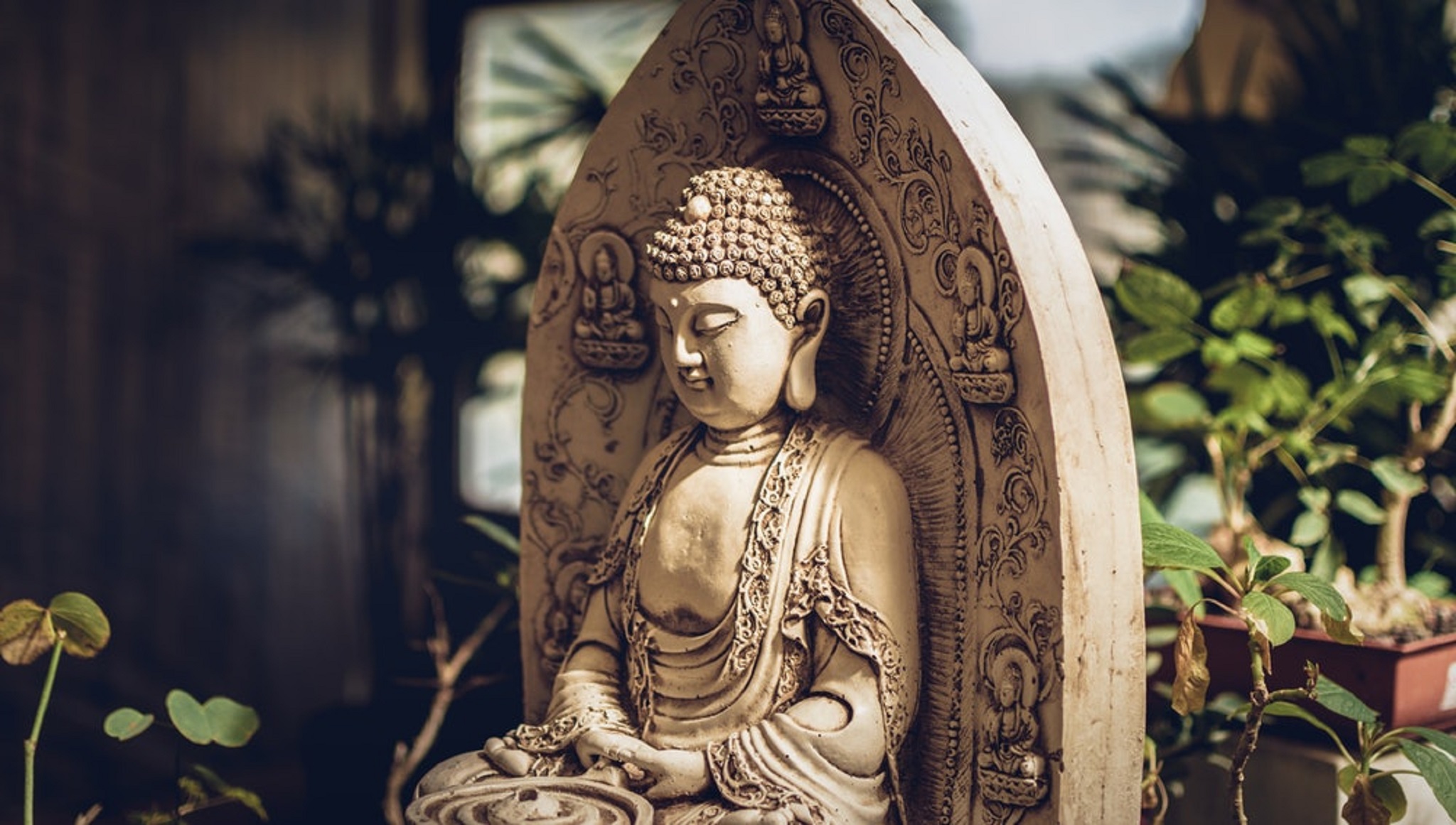
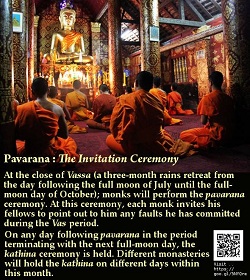
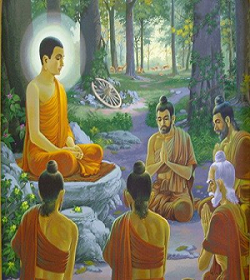
The term ‘Buddhism’ refers to Buddha Dhamma, the doctrine or the teachings of the Buddha, fully awakened. In general, the Buddhist history starts with the birth of prince Siddhattha in Lumbini present day Nepal about 2600 years ago. However, Buddhist philosophy and practice was started after his enlightenment at the age of 35 and taught for 45 years. There are many special or holy days held throughout the year by the Buddhist community. Many of these celebrated days are related to the life of the Buddha and other significant dates in the Buddhist calendar. Amongst the Vesak day (Buddha’s birth, enlightenment and passing away), Asalha puja and Kathina day (see below for detail) and Maghapuja day (great congregation of the sangha) are the most significant events in the Buddhist world Download PDF
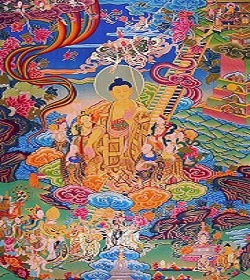
Lhabab Düchen is one of the four Buddhist festivals commemorating four events in the life of the Buddha, according to Tibetan traditions. Lhabab Düchen occurs on the 22nd day of the ninth lunar month according to Tibetan calendar and widely celebrated in Tibet and Bhutan. The festival is also celebrated in other Buddhist Asian countries including Sri Lanka, Myanmar, Thailand and Laos where it is celebrated a few weeks before the Tibetan and Bhutanese version. Lhabab Duchen is a Buddhist festival celebrated to observe the Buddha's descent from the Trāyastriṃśa heaven down to earth.On Lhabab Duchen, the effects of positive or negative actions are multiplied ten million times. It is part of Tibetan Buddhist tradition to engage in virtuous activities and prayer on this day. Download PDF
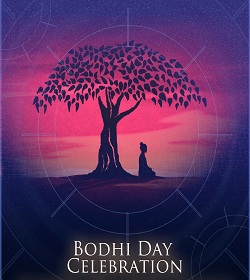
Bodhi Day is the Buddhist holiday that commemorates the day that the historical Buddha, Siddhartha Gautama (Shakyamuni), experienced enlightenment,[1] also known as bodhi in Sanskrit and Pali. According to tradition, Siddhartha had recently forsaken years of extreme ascetic practices and resolved to sit under a peepal tree and simply meditate until he found the root of suffering, and how to liberate oneself from itTraditions vary on what happened. Some say Siddhartha made a great vow to Nirvana and Earth to find the root of suffering, or die trying."Destroyer" in Sanskrit), demon of illusion.[2][3] Other traditions simply state that he entered deeper and deeper states of meditation, confronting the nature of the self. Download PDF
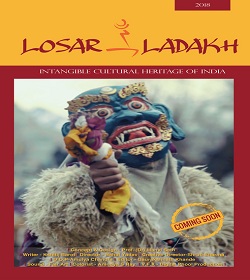
This is definitely the biggest holiday in Tibetan culture. Losar can be traced back to pre-Buddhist Tibetan ceremonies that celebrated the arts of cultivating, irrigation, and bridge building. Many customs and traditions are followed, both at the monasteries and in people’s homes. Losar was formerly celebrated for fifteen days but now the festivities range between three and seven days depending on the country. In monasteries, protector pujas are begun on the 29th day of the twelfth month in preparation for Losar ceremonies. Depending on where you live you might be able to attend a fire purification puja and have the opportunity to cast out your negativity from the old year. Download PDF
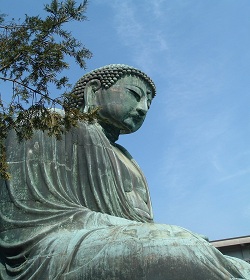
February 8th, or in some countries February 15th, is called Nirvana Day or Nehan-E in Japanese, the day of the historical Buddha’s passing away. It is said that on Shakyamuni Buddha’s death, he had achieved complete enlightenment, or Parinirvana, at the moment his physical body died. Having attained final enlightenment, the Buddha achieved freedom from physical existence and its sufferings. The Buddha taught that nirvana is a state of transcendental bliss that one can attain in this life or at death. Nirvana, explained the Buddha, is moving to a another plane of existence by extinguishing the flames of desire, anger, hatred and ignorance leading to final enlightenment, or an awareness of the true nature of reality. As such, the Buddha taught that Nirvana is beyond ordinary human comprehension and can never be described by words Download PDF
This Buddhist holiday celebrates a moment about 2,500 years ago when 1,250 enlightened Buddhist monks who had all been ordained by the Buddha came to see the Buddha without being summoned on the night of the full moon of the third lunar month. At a second, similar gathering 45 years later, also held on the first full moon of the third month, the Buddha announced that he intended to die in three months’ time. This announcement marks an important moment in Buddhist history. It is traditional to use this day to honor the Three Jewels of Buddhism: the Buddha (his enlightenment), the Sangha (the community of Buddhists around the world) and the Dharma (the teachings of the Buddha). Download PDF
This Japanese flower festival celebrates the birthday of the Buddha Shakyamuni’s birthday in 565 AD. The flowers commemorate the Buddha’s birth in a garden. Floral shrines are made and an image of the Buddha is bathed and placed in them. On this day, in Buddhist temples, an interesting ceremony takes place, Kanbutsu-e (The Bathing of Buddha). Originated from China, Kanbutsu-e started in Japan in the year 606, in Nara. On a flower decorated altar (hana mido), symbolizing the Lumbini garden, a small statue of Buddha, Tanjoubutsu (Buddha’s Birth), is placed in a shallow metal bowl.The ceremony recreates the legend that at birth, Buddha was sprinkled with perfume by two Dragon Kings. Download PDF
As one studies the world situation today, it becomes apparent that the secret of synthesis has been lost. Humanity is divided–one section against another section; the East versus the West; one race against another race; one nation against another nation. Men need to get back to the ancient knowledge that our planet is intended to demonstrate the essential unity of humanity, and that the energy which should manifest is that of integration and coherence. When this is truly realised our present world problems will adjust themselves, and the basic world rhythm will be reestablished and stabilised. Unfortunately, as yet, the race as a whole is not group conscious and therefore average humanity cannot be trusted to work, think and plan for the group Download PDF