In the 12th century, Roman liturgical practice during Advent was influenced by the liturgical practices in Gaul. Thus, the Roman liturgy came to take on a penitential feel, as can be seen in the omission of the Gloria and the wearing of purple vestments. However, for Rome “Advent was not regarded as properly a penitential season, as can be seen from the fact that the joyous alleluia was retained.”3 Furthermore, the commentary on the General Norms for the Liturgical Year states that the Gloria “is not omitted for the same reason as it is omitted in Lent, but in order that on the night of Christmas the angels’ song may ring out once again in all its newness.”4 Yet there still seems to be a penitential character to Advent. Download PDF
To avoid persecution during the Roman pagan festival, early Christians decked their homes with Saturnalia holly. As Christian numbers increased and their customs prevailed, the celebrations took on a Christian observance. But the early church actually did not celebrate the birth of Christ in December until Telesphorus, who was the second Bishop of Rome from 125 to 136AD, declared that Church services should be held during this time to celebrate "The Nativity of our Lord and Saviour." However, since no-one was quite sure in which month Christ was born, Nativity was often held in September, which was during the Jewish Feast of Trumpets (modern-day Rosh Hashanah). In fact, for more than 300 years, people observed the birth of Jesus on various dates. Download PDF
Lent is part of the rich history of the Christian Church, dating back to the third century CE. Lent is the 40 days prior to Easter (not counting Sundays). Lent is the Anglo-Saxon word meaning “lengthening of the days” as spring appears. The season began as a 40 hour fast of preparation for those who were going to be baptized on Easter, to coincide with the belief that Jesus spent 40 hours in the tomb. Over the years, it was expanded to include all the faithful and was lengthened to 40 days. The number 40 was chosen for its significance in the Bible: Moses fasted 40 days on Mt. Sinai, Elijah fasted 40 days on his way to the mountain of God, the Israelites spent 40 years in the wilderness, and Jesus was in the desert for 40 days. Download PDF
“The feast of Palm Sunday has been celebrated in our Church since the earliest days of Christianity, but the use of Palms in connection with religious celebrations goes all the way back to Old Testament times. Oddly enough Palm trees did not grow around the city of Jerusalem, and people would often buy imported Palms for religious celebrations, in particular The Feast of Tabernacles celebrated at the temple in Jerusalem. The Palm branch was used as a visual tool proclaiming the sovereignty of God as the true king of the Israelites.”“Palm Sunday, also called the Triumphal Entry, is one of the Great Feasts of the Orthodox Church, celebrated on the Sunday before Pascha (The Resurrection of Christ).” Download PDF
To millions of Church going Christians, "Easter" is one of the chief annual religious holidays. We see during this time lots of bunnies and eggs, and new spring fashions that come around Easter time. Television ads shout out their bargains featuring chocolate bunnies, eggs and hot cross buns every single year. Huge stadiums are filled with people that attend the "Easter sunrise Services." Like Christmas, did you ever stop to think where it all came from? Most don't stop to think what are the origins of some of these holidays? Where did it all come from? Christianity? How can someone even dare ask that question? Of course Christianity right? WRONG! Flat out wrong Download PDF
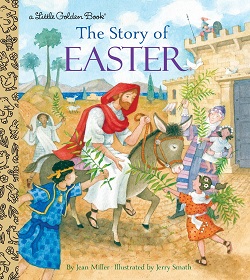
Notice another source what it says: "...The name Easter (Ger. 'Ostern'), like the names of the days of the week, is a survival from the old Teutonic mythology...[and] is derived from Eostre, Ostara, the Anglo-Saxon goddess of spring, to the month answering to our April...There is no indication of the observance of the Easter festival in the New Testament, or in the writings of the Apostolic Fathers...The first Christians continued to observe the Jewish Festival [Passover], though in a new spirit, as commemorating events which those festivals foreshadowed. Thus Passover with a new conception added to it of Christ as the true Paschal lamb and first fruits from the dead, continued to be observed, and became the 'Christian Easter''' (Encyclopedia Britannica, 11th edition, emphasis added). New Testament Church history reveals that the Christians continued in the festivals of the Old Testament with a new spirit, the truth of God in its full meaning, Jesus Christ! Download PDF
Christians think about the ascension of Christ and about the Pentecostexperience often gives rise to problems in the understanding of the NT texts that treat of these two early Christian events. Hence it may be worthwhile to try once again to sort out what the NT itself has to say about the ascension of Christ and about Pentecost to deepen our theological understanding of them, for the two events are not only intimately connected but are also related to the resurrection, the heart of Christian faith.Christian events recounted by him to be understood in relation to the resurrection of Christ? These modern questions are occasioned by the annual liturgical celebration of the Ascension between two feasts inherited by the Christian community from the Palestinian Jewish calendar and "baptized" Download PDF
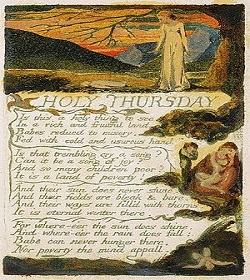
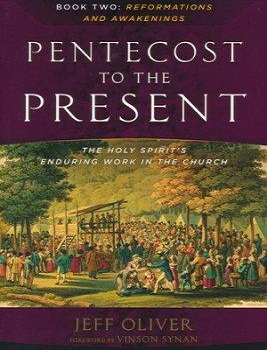
Prayer is one way that we can get ourselves ready to mark such a monumental event. Appreciating the significance of Pentecost is the first step in deciding what we want to pray for to tie in with its message. Essentially, Pentecost commemorates the day when the Holy Spirit filled the disciples after Jesus' ascension into heaven, and the birth of the church. In a way, both Christmas and Easter center around us receiving a gift - a savior and salvation - whereas Pentecost is about receiving (the gift of the Holy Spirit) but also about sharing the news of that gift with others.If you're still not sure about what Pentecost is, for more on what you need to know about the day itself read Mark Woods' 9 key things to know about Pentecost. Here are some key things you can pray for in the lead up to Pentecost. Download PDF