Rosh Hashanah is the celebration of the Jewish New Year. It’s a very important holiday on the Jewish calendar. It is the first of what we call the High Holidays (or High Holy Days), a ten-day period that ends with Yom Kippur—the holiest day of the Jewish year. On Rosh Hashanah, Jews from all over the world celebrate God’s creation of the world. Rosh Hashanah is two days long, and it usually occurs during the month of September. During Rosh Hashanah, Jewish people ask God for forgiveness for the things we’ve done wrong during the past year. We also remind ourselves not to repeat these mistakes in the coming year. In this way, Rosh Hashanah is an opportunity to improve ourselves. It’s a holiday that helps us to become better people. And that’s a beautiful thing. Download PDF
Yom Kippur dates from biblical times. The Torah states in three separate passages that “the tenth day of the seventh month is the Day of Atonement. It shall be a sacred occasion for you: You shall practice self-denial. . .” (Leviticus 23:27). That commandment became the basis of Yom Kippur.You will recall that the incident of the golden calf led Moses to shatter the first tablets of the law (Exodus 32:19). According to legend, he returned to Sinai, received a second set of tablets, then descended on the tenth of Tishri to find the Jewish people fasting and repenting. The midrash relates that God then forgave the people and established that day as a day of atonement for all generations. Download PDF
According to the Hebrew Bible, Jewish settlement in ancient Egypt first occurs when Joseph, a son of the patriarch Jacob and founder of one of the 12 tribes of Israel, moves his family there during a severe famine in their homeland of Canaan. For many years the Israelites live in harmony in the province of Goshen, but as their population grows the Egyptians begin to see them as a threat. After the death of Joseph and his brothers, the story goes, a particularly hostile pharaoh orders their enslavement and the systematic drowning of their firstborn sons in the Nile. When he reaches adulthood, Moses becomes aware of his true identity and the Egyptians’ brutal treatment of his fellow Hebrews. He kills an Egyptian slave master and escapes to the Sinai Peninsula, where he lives as a humble shepherd for 40 years. Download PDF
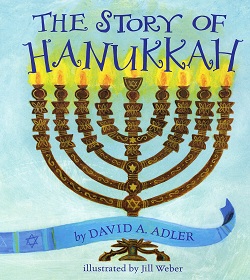
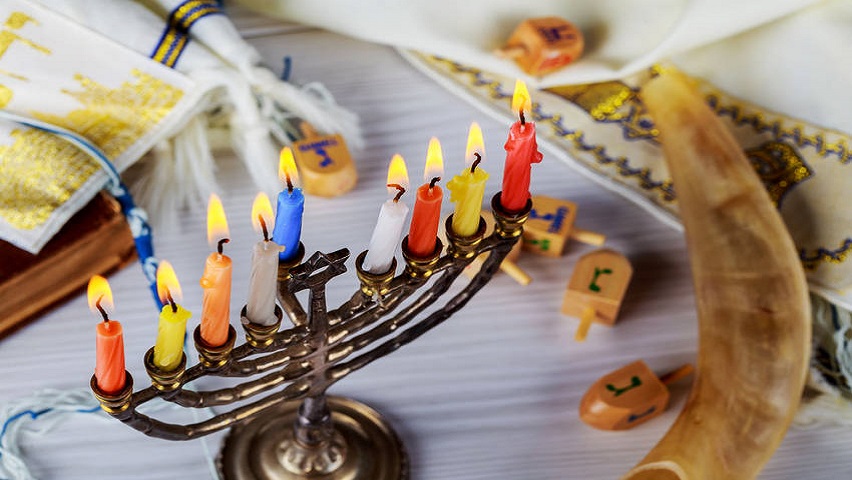
We are told that Hanukkah, the ceremony of rededication, lasted eight days. Some attribute this to the wonderful legend of the miracle of the oil... that when the Maccabees were victorious and returned to Jerusalem to clean out and rebuild the Temple, they found only enough oil to light the Ner Tamid for one night. However, a miracle occurred and this oil lasted for eight days until a new supply of pure oil could be secured. Some believe that, because the Hasmoneans could not celebrate Sukkot (which lasts eight days) during the years of their revolution, they combined that holiday with the festivities of their rededication of the Temple. This would explain the reason why Hanukkah is eight days in length. Others believe that because the dedication of the Temple in Solomon’s time lasted eight days, the Hasmoneans chose that same length of time for their celebration. Download PDF
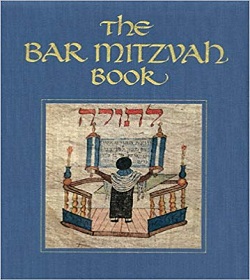
Bar Mitzvah (Hebrew: בַּר מִצְוָה) is a Jewish coming of age ritual for boys. Bat Mitzvah (Hebrew: בַּת מִצְוָה; Ashkenazi pronunciation: Bas Mitzveh) is a Jewish coming of age ritual for girls. The plural is B'nai Mitzvah for boys, and B'not Mitzvah (Ashkenazi pronunciation: B'nos Mitzvah) for girls. According to Jewish law, when Jewish boys become 13 years old, they become accountable for their actions and become a bar mitzvah. A girl becomes a bat mitzvah at the age of 12 according to Orthodox and Conservative Jews, and at the age of 13 according to Reform Jews.[1] Prior to reaching bar mitzvah age, the child's parents hold the responsibility for the child's actions.Bar mitzvah is mentioned in the Mishnah (Ethics of the Fathers, 5:21) and in the Talmud. Download PDF